BUREAU N IS A SPECIALIST CULTURAL
COMMUNICATIONS CONSULTANCY,
WORKING AT THE INTERSECTION OF
ART, ARCHITECTURE, PHOTOGRAPHY,
DESIGN AND OTHER THINGS WE LIKE.
Feed
Index


Hans-Peter Jochum
08.05. - 06.07.2013

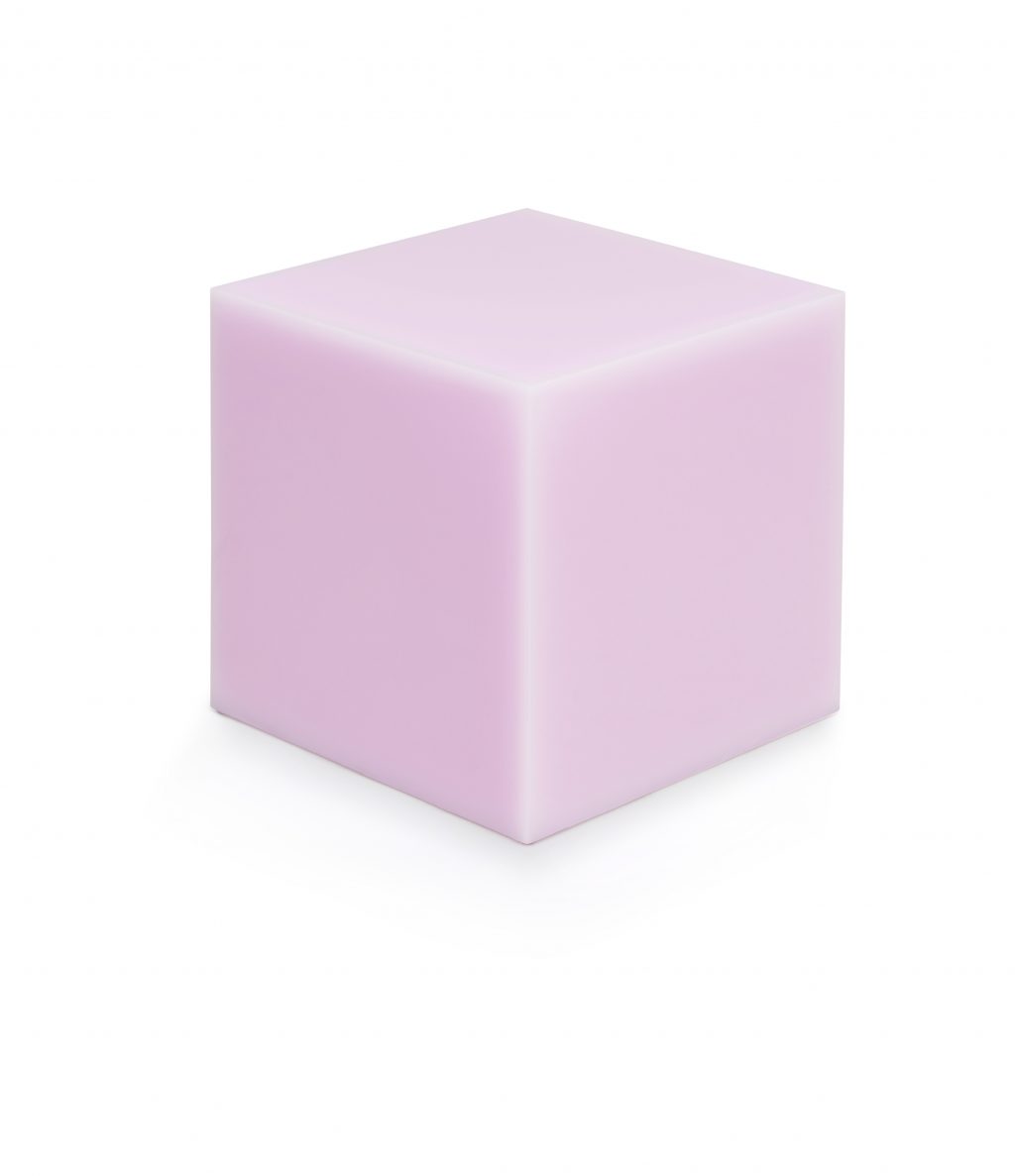
Furniture, by its very nature, is a practical form, defined by its character and functionality. In his new exhibition Raumbilder (Spatial Pictures), Sven Temper presents his latest works, unique takes on ordinary household furniture, rendered here in everyday wood and mass produced materials. The show at gallery Hans-Peter Jochum sets his particular usages through an array of sideboards, tables, chairs, shelves, as well as multiple new takes on the armchair. The title of the exhibition refers to both the material as well as the social connotations of space, its physical and social impact and how social spaces are constructed through communication and/or action.

Peres Projects
26.04. - 15.06.2013

Los Angeles born and bred, Alex Israel is strongly relating to his home city in his second solo exhibition at Peres Projects, entitled “Self-Portraits”. The new series of fiberglass self-portraits derives from the logo the artist first presented in his “As It LAys” installation, a graphic image which originally was influenced by Alfred Hitchcock’s films and the moment when the director turns into a line drawing of himself in profile. Creating the mock-ups in his studio, Israel then turns his graphic logo into a sign which the artisans at Warner Brothers produce in fiberglass and paint in a variety of color combinations, reflecting different aspects of LA culture as well as nodding to art history. The city of Los Angeles is one of the main subjects of Alex Israel’s artistitry, and throughout his work he makes several references to the entertainment culture that allows LA to exist and function the way it does. Using the Hollywood system to produce his works, Israel is once again referring to the strong legacy of the entertainment industry in the city. “Self-Portraits” expresses Israel’s desire to embody certain aspects of that culture, and to engage with certain formal elements of the city’s physical landscape.
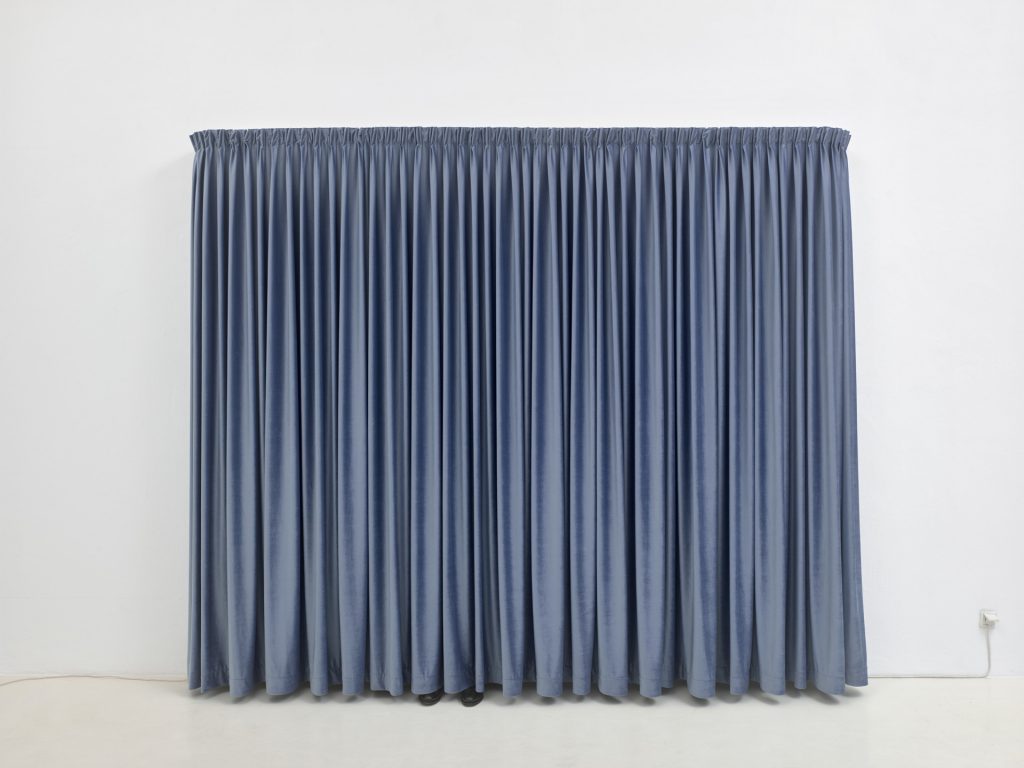

Credit all: Self Portrait, 2013; Courtesy Peres Projects, Berlin
26. - 28.04. 2013

Discovering art in gallery spaces and gaining insight into the contexts of its production: with some 51 participating galleries, Gallery Weekend Berlin constitutes an exquisite art experience. The range of galleries also offers a panoramic view of an art city which holds special significance within the art world, and which serves as a production place for many internationally acclaimed artists. Hereby it focuses explicitly on the gallery space as a quasi-condensed version of the art world: as the singular place where art making and art market, but also exhibiting and viewing art, coexist so closely together.
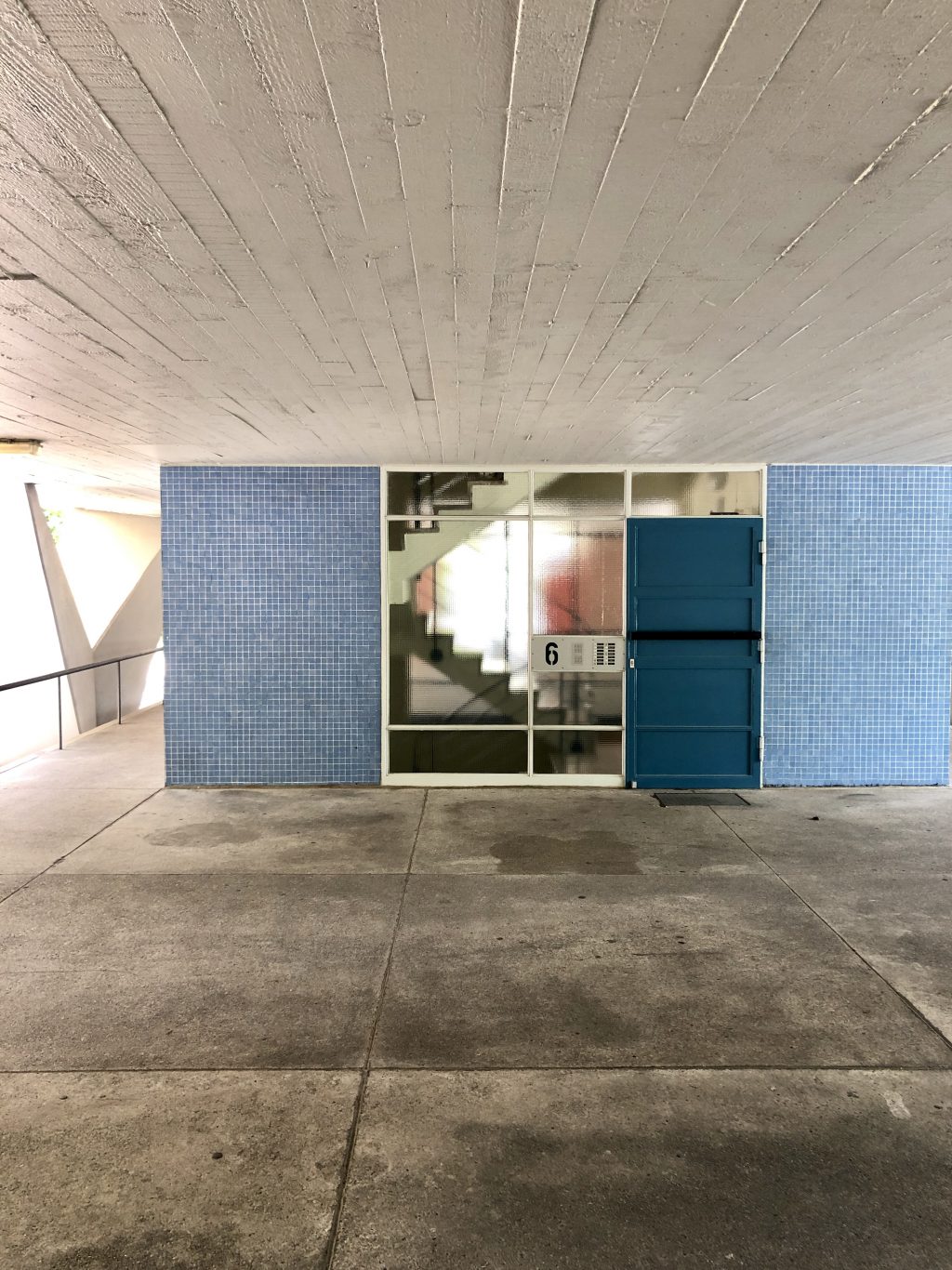

Eva Kotatkova (Installation view Kunstverein Braunschweig, courtesy Meyer Riegger); Ayşe Erkmen, tre Colori (courtesy Galerie Barbara Weiss, Berlin); George Condo, Day and Night (courtesy Sprüth Magers, Berlin London); Özlem Altin (Courtesy the artist and Circus, Berlin); Henri Chopin, from a manuscript by Henri Chopin (courtesy Fondazione Morra,  Naples and Supportico Lopez, Berlin)
Schinkel Pavillon
26.04. - 09.06.2013

Oscar Tuazon’s sculptural works are situated between architecture and performance. His site-specific interventions transform their surrounding or rather challenge the space until something goes wrong. Based on a rudimentary sketch, Tuazon inhabits the space he is working in and breaks it down. The results deliberately bear the traces of physical labor and testify to the artist’s fascination with the entropic quality of both, natural materials and the unlikely combination of construction materials. In formal terms, Tuazon’s sculptural works display loose links with the development of minimal and land art but they are brute and anti-monumental. For Schinkel Pavillon he creates an extensive new sculpture – a system of steel frames, each about the size of a doorway, a composition based on three modules: an equilateral triangle, a square, and a parallelogram. He configures these into a range of different spaces and passages to then add elements alongside and within the modular system. Complex and immense, the steel sculpture reacts to the transparency of the glass pavilion.


Credit: Installation view Schinkel Pavillon; Photos Nick Ash
Artek pop-up store and Stool 60 installation at KaDeWe
25.04. - 01.06. 2013

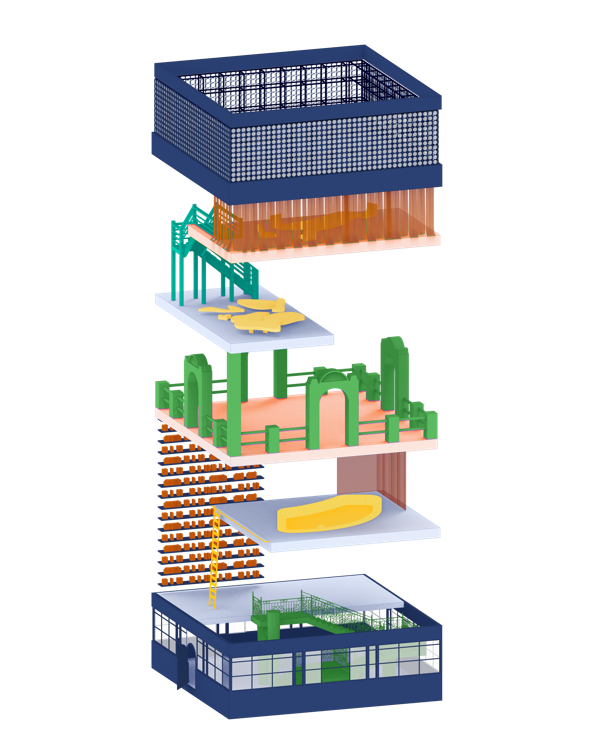
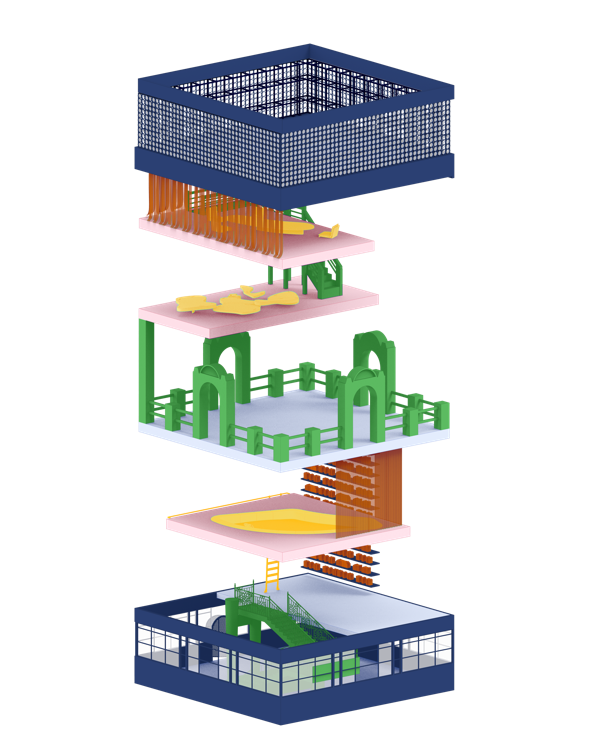
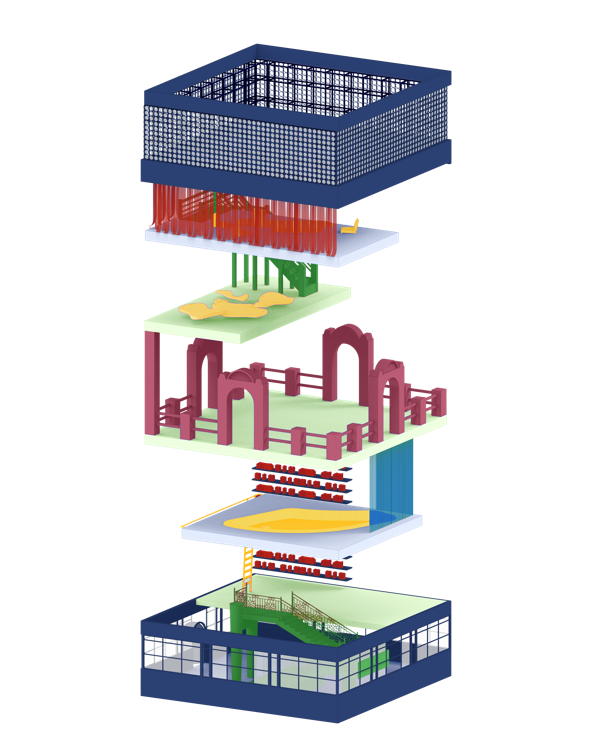
A quintessential piece of modern design, Stool 60 is one of the best-known design items in the world, and an iconic piece in the Artek collection. On the occasion of its 80th anniversary it’s being revisited by international designers and fans including designer Nao Tamura, fashion designer Mads Nørgaard, Comme des Garçons, Monocle, Tom Dixon and Mike Meiré. The colors of the Stool 60 Anniversary Edition were taken directly from Aalto’s most important functionalist building Paimio Sanatorium in Finland (1929–1933): the yellow of the floors, the green of the walls, the turquoise of the handrails and walls, and the orange, white and black of the furniture. All the special editions are now on display at Artek’s pop-up debut at the KaDeWe in Berlin. This collaboration not only marks Artek’s inaugural steps toward the Central European retail market, it also celebrates Artek’s first appearance in Berlin, in a public venue open to all design enthusiasts.

Peres Projects
01.03. - 13.04.2013

"‘I’m OK.’ Moments later, he was shot" is young German artist David Ostrowski’s debut solo show at Peres Projects. Ostrowski, who studied at Künstakademie Düsseldorf under Albert Oehlen, creates large, abstract paintings consisting of oil, lacquer, spray paint, paper, cardboard and cotton on canvas or burlap. Ostrowski is interested in the idea of nothingness, often referencing Seinfeld’s maestro of the mundane, George Costanza, in describing his work - 'Everybody’s doing something, we’ll do nothing'. His canvases are fascinating documents built up through trial and error. We see the artist building and destroying his image, adding and discarding canvas, colours, found fragments and dust, cocking a snook to strategy and cold-shouldering chronology. In his artistic practice, Ostrowski strives to reduce his own decision-making and instead, allows the physicality of his actions rule, in an ongoing struggle to unlearn and rediscover.


From top: F (A thing is a thing in a whole which it's not), F (Gee Vaucher), F (Jet Grill), courtesy Peres Projects, Berlin
15.03. - 26.05.2013
Akademie der Künste, Berlin

The exhibition Culture:City encourages everyone to think consistently about the future of our cities and takes a critical eye to the relationship between architecture and the social reality of the 21st century, showing the impact of art and culture on cities and architecture. The selection of international examples presented – ranging from spectacular architectural and art projects, via the creative reuse of empty buildings and city areas, through to citizens’ initiatives – opens up a panorama of constructed concretisation of culture thus allowing us not only to take stock of the surroundings but also to evaluate and assess each individual case. Does the social, cultural and architectural rootedness in the city work and does this lead to new forms of cultural production? Or does the construction project merely represent a symbol strong on marketing, yet another island in a city’s public spaces characterised by increasing fragmentation?
The debate thus triggered in the exhibition, curated by Matthias Sauerbruch, is continued in the form of lectures, film screenings, concerts, sound installations and conferences a.o. with Jacques Herzog, Peter Cook, Patrick Bouchain, Peter Eisenman, Selgas Cano Arquitectos a.o. to Berlin.


Credits from top: Inner-City Arts, Los Angeles, 2008 – Community centre / art school – Architect: Michael Maltzan Architecture – Photo: Iwan Baan; Centre Georges Pompidou, Paris, 1977 – Architects: Studio Piano & Rogers, architects (Renzo Piano and Richard Rogers) – Courtesy: RPBW, Renzo Piano Building Workshop; Detroit SOUP – A monthly dinner funding micro-grants for creative projects in Detroit. – Photo: David Lewinski; Filmstill: Modern Times – Director: Cyril Amon Schäublin – Building: SANAA-Gebäude, Standort der Folkwang Universität der Künste – © Cyril Amon Schäublin; Filmstill: After hours – Director: Steffen Köhn – Building: Berghain – © Phillip Kaminiak
Curated by Fredi Fischli and Niels Olsen
Schinkel Pavillon
2.2. - 3.3.2013

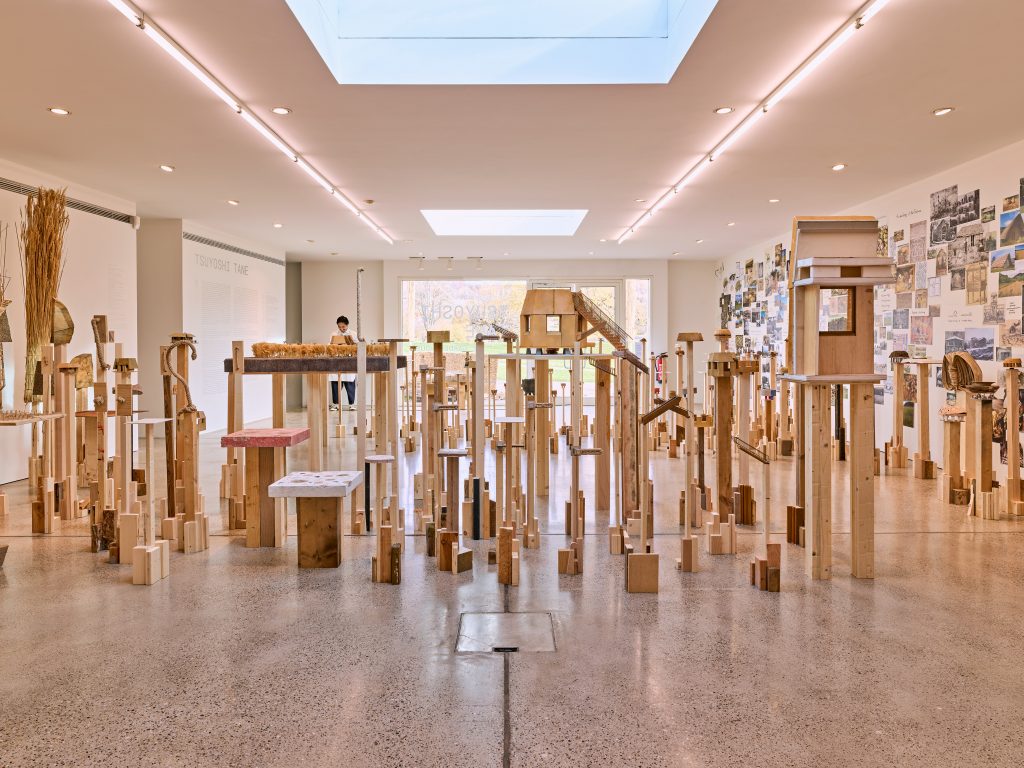
The exhibition NO MORE WAR introduces a previously unknown group of Keiichi Tanaami's sculptural works from the 1980s, as well as the influential animation films from the 1970s, on loan from the collection of the Nationalgalerie, Staatliche Museen zu Berlin. Tanaami brings a Japanese look to the neoclassical architecture of the former East German Schinkel Pavillon: In his early animated films, the bright colours of traumatic World War II memory fragments are superimposed with clips from American commercials creating collage-like animation works. Images of pop-stars, imaginary creatures, scenes of everyday life and horror as well as libidinous fantasies flood the visitor. The series of colourful wood-cut sculptures from the 1980s form a sharp contrast to the animation movies: The toy-like objects evoke notions of creation, existence and death. They form a forest of obscure objects reminiscent of fantastic architecture, post-modern design objects and monsters from video games. Here Tanaami defines his own concept of sculpture by exaggerating traditional Japanese artisan craftwork and imbuing them with contemporary references.


Credits: 1+2+3 Courtesy Nanzuka Gallery, 4: Photo Nina Pohl.
TWO YOUNGER WOMEN COME IN AND PULL OUT A TABLE
De Pont Museum of Contemporary Art, Tilburg (NL)
16.2. - 9.6. 2013

Two Younger Women Come in and Pull out a Table
surveys the multifaceted strand of painting in the artist’s tremendous body of work. A decade of large-scale works on canvas will be on view alongside site-specific interventions in different mediums: voluminous polystyrene objects, textile accumulations, oversized balloons and the walls of the museum are all used as carriers of images. The factory hall of the former wool mills, which forms the kern of the exhibition, is taken up by an extensive, color-intensive installation. Bunches of grapes, made out of large PVC and latex balloons, and measuring four meters in size float under the historical ceiling construction. This gigantic labyrinth corresponds with the towering laminated polystyrene objects that occupy the museum’s entrance hall. The sheer magnitude and structure of these bodies render it impossible to capture the work in its entirety from a singular point of view. Here, seeing necessarily implies movement in space.


Credits: Installation view at De Pont Museum of Contemporary Art, Tilburg (NL); Photos: Peter Cox; Copyright: Katharina Grosse + VG Bild-Kunst Bonn, 2013.
Peres Projects temporary exhibition space
9.2. – 9.3.2013

In a temporary exhibition space on the historic Karl-Marx-Allee in Berlin, Peres Projects is presenting Gay Town - a solo project with James Franco. Exploring a variety of themes central to the artist’s practice, Gay Town is devoted to issues related to adolescence, public and private persona, stereotypes and other societal concerns such as society’s preoccupation with celebrity. James Franco created many of the artworks in hotel rooms, makeshift studios and other temporary locations whilst completing other projects, mainly motion picture work. Working across media including painting, drawing, film, sculpture, installation and photography, Franco elects the media that best fits the project rather than committing to a sole artistic practice.


top: Gay Town (2012), below: Untitled (2012); all courtesy of Peres Projects
 
  Getting more posts...